
TASK ELITE · HOMEOWNER PLANNING GUIDE
Renovating your only bathroom: plan for the people who use it
A better bathroom should start with a plan for mornings, evenings and everyone who still needs to live at home.
THE STARTING POINT
What to know before you commit.
Before renovating your only bathroom, agree how your household will manage toilet, washing and shower access; when those facilities may be unavailable; and what alternative arrangements are practical. Finalize important selections and discuss the work sequence before removal begins. Do not assume the toilet can be reconnected nightly or that one advertised completion time fits your room.
Read the details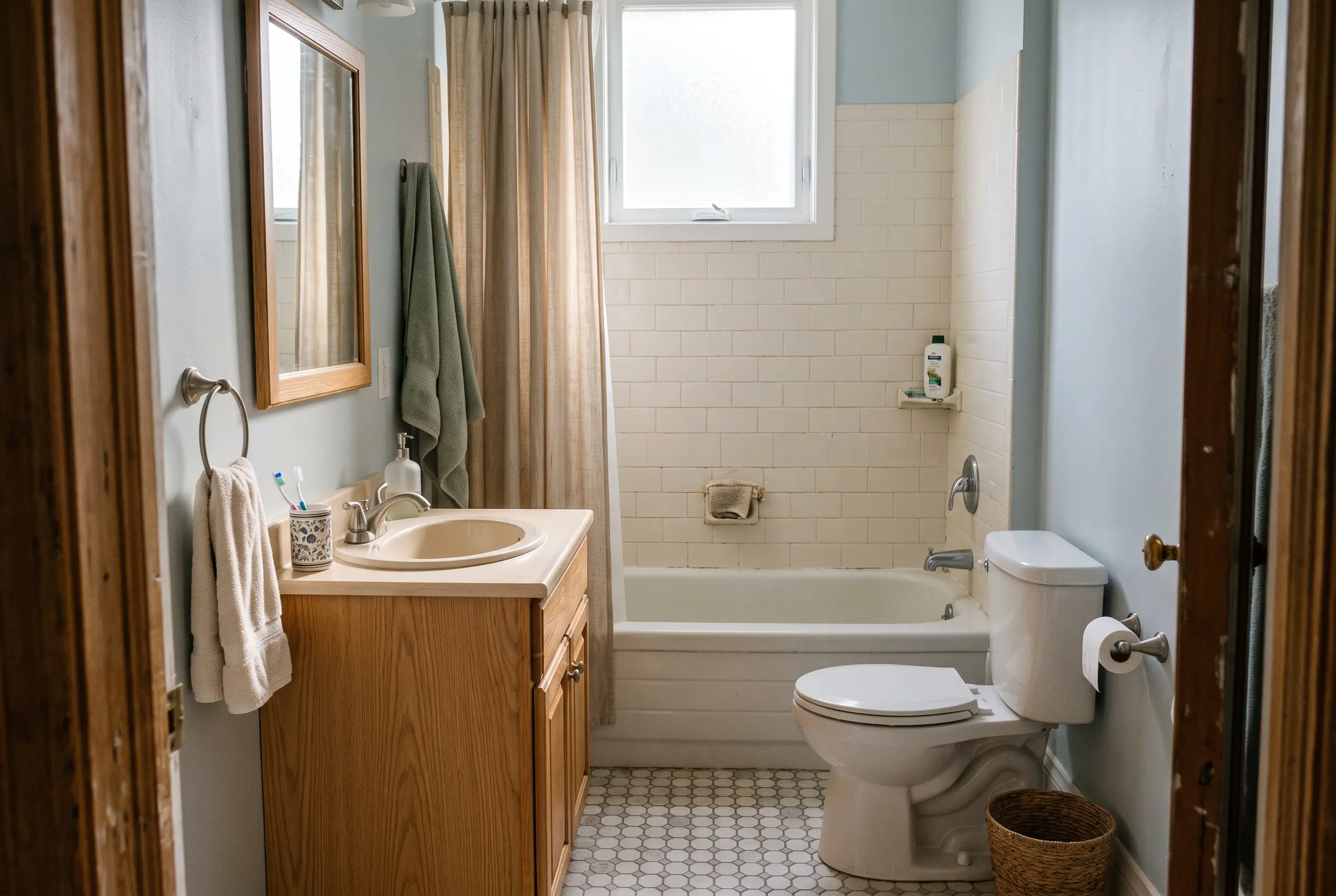
“This is our only bathroom” belongs in the first conversation
It is not a minor scheduling detail. A room that serves the whole household affects getting ready for work, school mornings, bedtime and privacy. Tell the contractor early, before the scope and proposed sequence are settled.
Also explain anything that makes the household's access needs less flexible. You do not need to share private medical information; describe the practical accommodation you need, such as step-free access or reliable overnight toilet access. Where specialist advice is needed, involve the appropriate professional rather than assuming a renovation plan settles it.
Task Elite's bathroom enquiry welcomes those constraints. The goal is to clarify the right next step, not to promise an arrangement before the room has been assessed.
Ask about the toilet, sink and shower separately
“Can we use the bathroom?” is too broad. A proposal should explain which facilities will be affected and what can reasonably remain available during each part of the agreed work.
- Toilet access. Ask when it needs to be disconnected, whether any temporary arrangement is feasible and when normal use is expected to return. Never assume nightly reconnection is included or possible.
- Washing and water. Ask whether interruptions affect only this room or other fixtures in the house. Establish how you will receive notice of planned shut-offs.
- Bathing. Discuss when the tub or shower will be unavailable and what needs to be completed before it is ready to use again.
- Entry to the room. Confirm when access is restricted because it is an active work area, even when some equipment appears to be in place.
Keep the distinction between a fixture being installed and permission to use it. The contractor should explain when the relevant work and checks are complete.
Make an alternative plan that works at the difficult times
Think beyond the convenient part of the day. A family member's bathroom may be useful in the afternoon but not practical overnight. A temporary arrangement also needs to work for children, visitors and anyone with particular access requirements.
Discuss realistic alternatives before committing to the construction schedule. Depending on your circumstances, that may involve facilities elsewhere, a separately assessed temporary arrangement or staying away for part of the work. Do not treat an idea as booked, included or suitable until its details have been confirmed.
Include any costs of those arrangements in your household budget rather than assuming they belong to the contractor's quote. Our bathroom renovation cost guide explains the difference between a planning range and a complete proposal.
A good access plan answers “where, when and for whom?”—not just “we will work something out.”

A small preparation detail can matter a great deal when the room is part of everyone's routine.
What should be ready before the old room comes out?
We suggest agreeing on the fixtures, important dimensions and materials that affect the work sequence. Ask which items need to be on hand before removal and who confirms they match the order.
Discuss storage for delivered products, the route through the house and protection for adjacent areas. Move everyday toiletries and items you will need out of the work area in advance. Agree how pets and children will be kept separate from it.
The plan should also state who can approve decisions while the work is underway and how the contractor will contact that person. Avoid having an unresolved selection depend on someone who cannot be reached during the relevant period.
Discuss milestones, not a universal promise
Ask for the expected work sequence after the actual scope is understood. Removal, preparation, service work, wet-area work and finishes should not be treated as interchangeable days on a generic calendar.
Where products need time before the next stage or before use, the applicable manufacturer's instructions matter. For example, a tiled shower requires more than an attractive tile surface; Schluter explains the purpose of the waterproofing beneath it. Do not pressure a sequence to skip a required step simply to match an earlier assumption.
Ask what happens if a delivery is wrong, a hidden condition is found or the agreed work changes. The useful commitment is a clear process for explaining the issue, its effect and the decision needed—not pretending those possibilities never exist.
Confirm permit and trade-review responsibilities during scoping. The City of London's building-permit resources provide the relevant municipal starting point.

Seven questions to take to your bathroom conversation
- Which facilities will be unavailable, and at which stages?
- What access is realistically possible outside working hours?
- What alternative arrangements do we need to organize ourselves?
- Which selections and deliveries must be confirmed before removal?
- How will work areas, access routes and cleanup be managed?
- Who updates us, and who needs to approve a scope change?
- What must happen before each new fixture is ready to use?
Ask for important answers to be reflected in the written plan. When you are comparing contractors, use the same household constraints in each discussion. See our guide to comparing renovation quotes.
Common only-bathroom questions
Can we definitely remain at home?
That depends on the work and on suitable alternative facilities. Assess both before making that decision; a general website guide cannot confirm them for your household.
Can the toilet stay until the last possible moment?
Raise the priority early. Whether it can remain and for how long depends on the actual work sequence. Do not assume it is feasible before assessment.
Does a refresh avoid all bathroom downtime?
No. Even a focused scope can interrupt fixture use. Ask what is affected by your specific changes.
Sources and the basis of this guide
This is a practical planning checklist based on Task Elite's approved service approach, not a construction schedule or personal care assessment. The linked municipal and manufacturer resources address their respective approval and installation topics. No project duration or example is presented as a verified Task Elite customer outcome.
The images are coordinated design concepts for planning inspiration.